
When most people think about tick-borne diseases, Lyme disease is usually the first thing that comes to mind. However, ticks can transmit much more than bacteria and parasites. Have you noticed that suddenly Alpha-Gal seems to be everywhere?
Social media is buzzing with stories of people developing Alpha-Gal Syndrome after a tick bite. News outlets are reporting increasing numbers of cases. Friends are sharing posts warning about the dangers of Lone Star ticks. Some people are even talking about stories they’ve heard regarding tick boxes and the spread of Alpha-Gal-carrying ticks across the country.
With so much information—and misinformation—circulating online, it’s understandable that many people are feeling concerned. For those of us already familiar with Lyme disease and other tick-borne illnesses, hearing about yet another serious health condition connected to ticks can feel overwhelming.
But rather than jumping on the fear bandwagon, let’s focus on something more productive: education.
Fear rarely helps us make good decisions. Knowledge does.
Alpha-Gal Syndrome is a very real condition that deserves our attention. Understanding what it is, how it develops, which symptoms to watch for, and how to protect yourself can help you respond wisely rather than react out of fear. The goal isn’t to panic every time you step outside. The goal is to be informed, prepared, and empowered.
So let’s dive into the facts about Alpha-Gal Syndrome and help alleviate your fears and answer your questions.
What Is Alpha-Gal Syndrome?
Alpha-gal isn’t an infection or immune imbalance—it’s a true food allergy to a sugar found in mammalian meat and byproducts (beef, pork, lamb, gelatin, etc.) that develops after certain tick bites. Alpha-gal (galactose-α-1,3-galactose) is a sugar molecule found in most mammals, including:
- Beef
- Pork
- Lamb
- Venison
- Goat
- Rabbit
- Bison
Humans do not naturally produce alpha-gal. When a tick bite triggers the immune system to recognize this sugar as a threat, the body can begin producing antibodies against it. Once that happens, consuming foods or products containing alpha-gal may trigger allergic reactions.
Which Tick Causes Alpha-Gal?
In the United States, Alpha-Gal Syndrome is most commonly associated with the Lone Star Tick. The Lone Star Tick is easily recognized by the white spot found on the back of adult females. Its range has expanded significantly over the past several decades, increasing the number of Alpha-Gal cases being diagnosed throughout the country.

While the Lone Star Tick is considered the primary cause in the United States, researchers continue to investigate whether other tick species may also contribute to Alpha-Gal Syndrome in certain regions.

How Does Someone Develop Alpha-Gal Syndrome?
The process usually begins with a tick bite.
When the tick feeds, it injects saliva into the skin. In susceptible individuals, the immune system responds by creating antibodies against alpha-gal.
Weeks, months, or even years later, the person may experience allergic reactions after consuming mammalian products.
One of the most confusing aspects of Alpha-Gal Syndrome is that symptoms often occur several hours after eating, making it difficult to connect the reaction to a specific food.
Common Symptoms of Alpha-Gal Syndrome
Symptoms can vary greatly from person to person.
Some individuals experience mild digestive discomfort, while others suffer life-threatening allergic reactions.
Common symptoms include:
Skin Reactions
- Hives
- Itching
- Flushing
- Swelling
Digestive Symptoms
- Abdominal pain
- Nausea
- Vomiting
- Diarrhea
- Heartburn
- Acid reflux
Respiratory Symptoms
- Wheezing
- Shortness of breath
- Throat tightness
Cardiovascular Symptoms
- Dizziness
- Rapid heartbeat
- Low blood pressure
- Fainting
Severe Reactions
- Anaphylaxis
- Loss of consciousness
- Medical emergencies requiring immediate treatment
Unlike most food allergies, Alpha-Gal reactions often occur 2–6 hours after eating, frequently waking people in the middle of the night after consuming red meat with dinner.
Hidden Sources of Alpha-Gal
Many people assume they only need to avoid steak or hamburgers.
Unfortunately, alpha-gal can be found in many products, including:
- Beef
- Pork
- Lamb
- Venison
- Organ meats
- Gelatin
- Bone broth
- Lard
- Tallow
- Some dairy products
Some individuals may also react to:
- Gelatin capsules
- Certain medications
- Medical products derived from mammals
- Some cosmetic ingredients
Sensitivity levels vary, so it is important to work with a knowledgeable healthcare provider if Alpha-Gal Syndrome is suspected.
How Is Alpha-Gal Diagnosed?
Diagnosis typically involves:
- A thorough medical history
- Evaluation of symptoms
- Discussion of tick exposure
- Alpha-Gal IgE blood testing
Because symptoms can mimic many other conditions, Alpha-Gal often goes undiagnosed for months or even years.
Can Alpha-Gal Syndrome Be Prevented?
The best prevention is avoiding tick bites in the first place. If, however, you do get bitten by a tick, please refer to my tick treatment guidelines and treat every tick bite. Alpha-Gal is not the only infection to be proactive against.
Protect Yourself Outdoors
- Wear long sleeves and long pants.
- Use EPA-approved tick repellents.
- Treat clothing with permethrin.
- Stay on clear trails whenever possible.
- Avoid brushing against tall grass and dense vegetation.
Perform Daily Tick Checks
Always check:
- Hairline
- Behind the ears
- Armpits
- Waistline
- Groin
- Behind the knees
The sooner a tick is discovered and removed properly, the better.
What Should You Do If You Find a Tick?
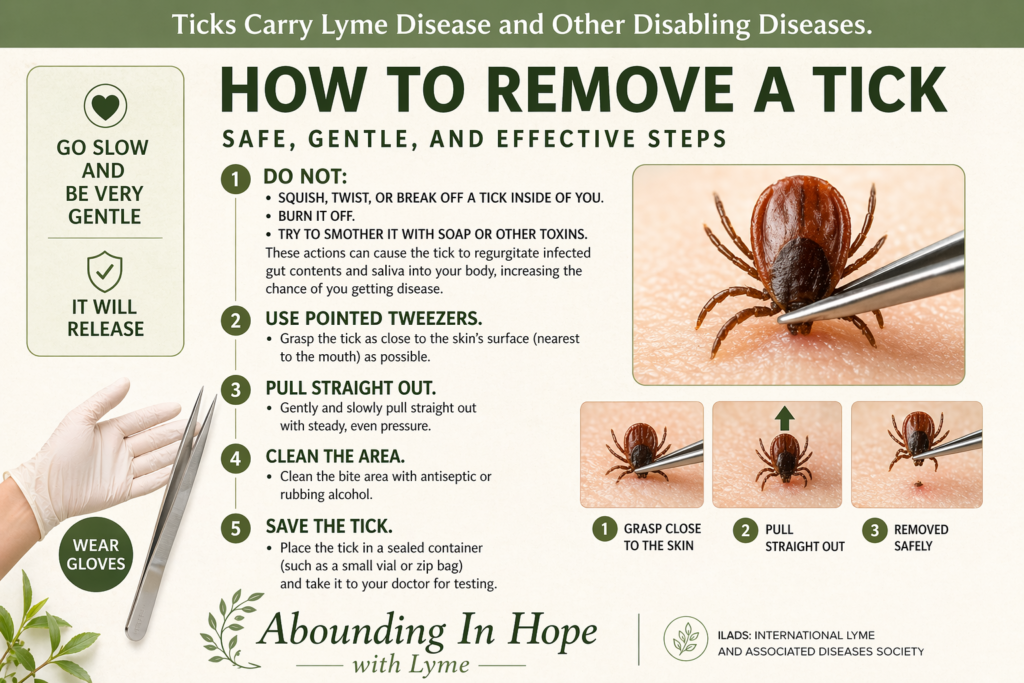
If you discover a tick attached to your skin:
✔ Use fine-tipped tweezers.

✔ Grasp the tick as close to the skin as possible.
✔ Pull straight upward with steady pressure.
✔ Clean the area afterward.
Avoid:
✘ Burning the tick
✘ Smothering it with petroleum jelly
✘ Applying essential oils
✘ Twisting or crushing the tick
Improper removal methods may increase the risk of exposure to pathogens and tick saliva.
Conventional Treatment for Alpha-Gal Syndrome
Not surprisingly, there is no FDA-approved cure for Alpha-Gal Syndrome.
Treatment focuses on:
- Avoiding alpha-gal-containing foods and products
- Preventing future tick bites
- Carrying an epinephrine auto-injector if recommended by your physician
- Using antihistamines when appropriate
Some individuals experience improvement over time, particularly when they successfully avoid additional tick bites.
Integrative and Functional Medicine Approaches
Many people in the chronic illness community seek supportive therapies to help calm inflammation and support immune balance. Oftentimes, holistic practitioners will use the following to support the immune system:
Nutritional Support
- Vitamin C
- Quercetin
- DAO enzyme
- Zinc
- Mast-cell-supportive nutrients
Herbal Support
Some commonly used herbs include:
- Holy Basil
- Lemon Balm
- Reishi Mushroom
- Skullcap
- Curcumin
These herbs are generally used to support immune regulation and inflammation balance rather than as direct treatments for Alpha-Gal.
Traditional Chinese Medicine
Some individuals report benefits from:
- Acupuncture
- Herbal formulas
- Digestive support therapies
What About Homeopathy?
Homeopathy is my first line of defense for any tick bite. You can find the protocol I follow on my How to Treat a Tick Bite page. Some homeopathic practitioners have developed protocols for Alpha-Gal Syndrome. As with any therapy, individuals should consult qualified healthcare providers and make informed decisions about their care.*
SAAT: A Treatment Generating Significant Interest
One treatment receiving considerable attention within the Alpha-Gal community is SAAT (Soliman Auricular Allergy Treatment). SAAT was developed by Dr. Nader Soliman before all the hype and hoopla. In fact, he has been successfully helping patients with Alpha-Gal for many years.
Dr. Soliman is the doctor who treated my and my family’s chronic tick-borne infections, mold illness, and my daughter’s PANS, and helped us get our lives back. I will always be eternally grateful.
SAAT involves placing a tiny acupuncture needle into a specific point in the ear for several weeks. Practitioners believe this may help regulate the body’s allergic response.
Many patients report significant improvement following treatment, and I’ve read many online testimonials from patients in private Facebook groups reporting the success they’ve had with this treatment and that they have been able to reintroduce the foods that were causing allergic responses.
Because of the many positive testimonials circulating online, SAAT continues to be one of the most discussed alternative therapies for Alpha-Gal Syndrome.
A Message of Hope
If you’ve recently been diagnosed with Alpha-Gal Syndrome, you may feel overwhelmed, frustrated, or even scared.
Many people find themselves grieving the loss of familiar foods and navigating a steep learning curve when it comes to ingredient labels, medications, and social situations.
The good news is that awareness is growing. More healthcare providers are learning about Alpha-Gal Syndrome, more testing is available, and researchers are actively working to better understand this condition.
Most importantly, you are not alone.
Whether you’re navigating Lyme disease, Alpha-Gal Syndrome, or another tick-borne illness, there is hope. Education empowers us to make informed decisions, advocate for ourselves, and protect those we love.
The more we understand the risks associated with tick bites, the better prepared we are to prevent them—and to recognize the signs when something isn’t right.
Have you or someone you know been diagnosed with Alpha-Gal Syndrome? Share your experience in the comments below. Your story may help someone else feel less alone on their journey.


Leave a Reply